You’ve cleaned out your pantry.
You’ve stocked your kitchen with keto-friendly foods.
You’re motivated to cut back on carbs and finally give the ketogenic diet a real chance.
Then you walk into a grocery store.
Suddenly, every package seems to make the same promise:
“Low fat.”
“Whole grain.”
“Natural.”
“Made with real fruit.”
“Healthy choice.”
For someone just starting keto, these labels can be surprisingly misleading.
Some foods that have been marketed as healthy for years—like breakfast cereals, fruit juice, flavored yogurt, or granola—can contain far more carbohydrates than many beginners realize. On the other hand, foods that people often avoid, such as eggs, cheese, avocados, and olive oil, may actually fit perfectly into a ketogenic lifestyle.
That’s why success on keto isn’t simply about eating more fat or avoiding sugar. It’s about understanding where carbohydrates hide and learning how to make informed choices every time you shop, cook, or eat out.
The good news?
You don’t need to memorize hundreds of foods or count every gram of carbohydrate from day one.
Once you recognize the most common high-carb foods—and discover a few simple alternatives—making keto-friendly choices becomes much more natural.
In this guide, we’ll walk through 27 foods and food groups that are best limited or avoided on a ketogenic diet, explain why they can make staying low-carb more difficult, and suggest practical swaps that help you enjoy your meals without feeling restricted.
By the end, you’ll know exactly what deserves a place in your kitchen—and what can stay on the grocery store shelf.
High-carb foods compared with keto-friendly foods in a grocery store.
Why Knowing What to Avoid Matters More Than Most Beginners Think
One of the biggest misconceptions about keto is that success depends on finding the “perfect” foods to eat.
In reality, avoiding the wrong foods is often even more important.
Most beginners don’t struggle because they lack motivation. They struggle because carbohydrates can appear in places they don’t expect. A bowl of cereal, a flavored coffee drink, a “healthy” smoothie, or even a salad dressing can contain enough carbohydrates to make sticking to a low-carb eating pattern much more difficult.
The challenge becomes even greater because many processed foods are marketed as healthy while still being surprisingly high in sugar or refined starches.
This doesn’t mean you need to fear every carbohydrate or obsess over every nutrition label. Instead, the goal is to recognize the foods that contribute the most unnecessary carbs and replace them with simpler, more satisfying options.
If you’ve already followed our Keto Shopping List for Beginners, you’ve learned what to put in your cart. Now it’s just as important to understand what to leave behind—and why.
27 High-Carb Foods to Avoid on Keto
Now that you understand why hidden carbohydrates matter, let’s look at the foods that cause the most confusion for beginners.
This isn’t about labeling foods as “good” or “bad.” Many of the foods below can be part of a balanced diet for other eating styles. However, because a ketogenic diet relies on keeping carbohydrate intake low, these foods are generally best limited or avoided.
1. Bread
Whether it’s white bread, whole wheat bread, multigrain, sourdough, or artisan bread, most varieties are made primarily from flour, making them one of the largest sources of carbohydrates in the average diet.
Many people assume whole-grain bread is keto-friendly because it’s often marketed as a healthier choice. While it may contain more fiber than white bread, it’s still usually too high in carbohydrates to fit comfortably into a ketogenic eating plan.
Better alternatives:
- Keto bread
- Lettuce wraps
- Low-carb tortillas
- Cloud bread
2. Pasta
Traditional pasta is another staple that can quickly exceed your daily carbohydrate target.
Even a moderate serving may contain more carbs than many people following keto aim to consume in an entire day.
Fortunately, there are several satisfying alternatives that provide a similar experience without the heavy carb load.
Try instead:
- Zucchini noodles
- Shirataki noodles
- Hearts of palm pasta
- Spaghetti squash
3. Rice
Rice is naturally gluten-free and widely consumed around the world, but it’s also rich in starch.
Whether it’s white rice, brown rice, jasmine, or basmati, the carbohydrate content remains too high for most ketogenic meal plans.
Low-carb swaps include:
- Cauliflower rice
- Broccoli rice
- Cabbage rice
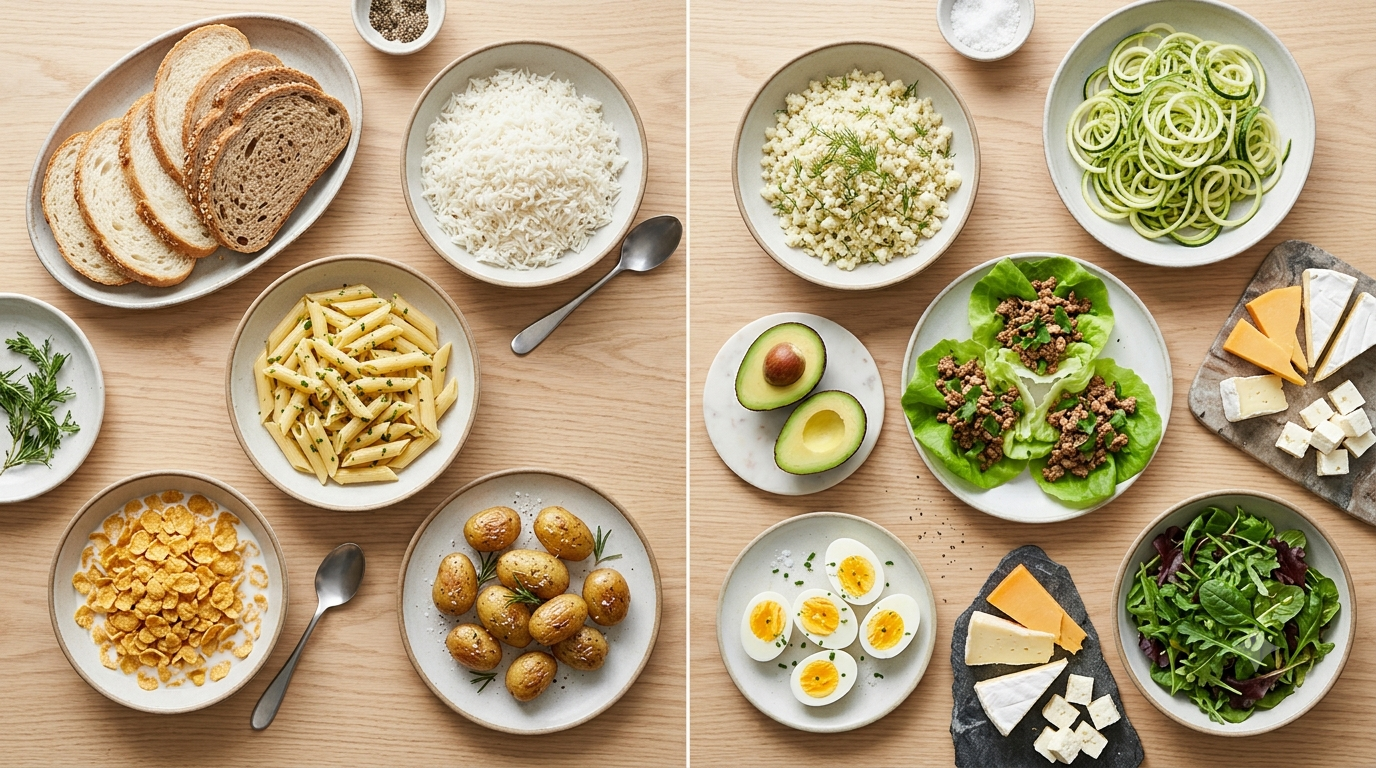
High-carb foods compared with keto-friendly alternatives.
4. Breakfast Cereals
Many breakfast cereals are promoted as healthy because they’re fortified with vitamins or labeled as “whole grain.”
Unfortunately, they’re often loaded with refined grains and added sugar.
Even cereals marketed as healthy can contain surprisingly high amounts of carbohydrates.
If you’re looking for breakfast ideas that fit keto, we’ve already covered several delicious options in our Easy Keto Breakfast Ideas guide.
5. Oatmeal
Oatmeal is often recommended as a nutritious breakfast because it’s rich in fiber and whole grains.
However, from a ketogenic perspective, traditional oats contain more carbohydrates than many beginners expect.
If you enjoy warm breakfasts, chia pudding or flaxseed porridge can offer a similar texture while remaining much lower in carbs.
6. Potatoes
Potatoes are one of the most common foods people struggle to give up when starting keto.
Whether baked, mashed, roasted, or turned into fries, potatoes are naturally high in starch.
Popular substitutes include:
- Cauliflower mash
- Roasted radishes
- Turnips (in moderation)
7. Sweet Potatoes
Although sweet potatoes contain more vitamins than regular potatoes, they’re still relatively high in carbohydrates.
They’re an excellent food for many diets—but not an ideal choice when your goal is maintaining ketosis.
8. Corn
Corn is technically a vegetable, but nutritionally it behaves more like a starchy grain.
Corn kernels, corn tortillas, popcorn, and corn chips all contribute significantly more carbohydrates than many keto beginners realize.
9. Beans and Lentils
Beans, chickpeas, and lentils are packed with fiber, plant protein, and important nutrients.
However, they’re also relatively high in carbohydrates, making portion size important for anyone following a strict ketogenic diet.
Some people include very small servings depending on their daily carb allowance, but beginners often find it easier to focus on lower-carb vegetables instead.
10. Most Fruits
Fruit is healthy.
That surprises many people.
But “healthy” doesn’t always mean “keto-friendly.”
Bananas, grapes, mangoes, pineapples, and apples naturally contain significant amounts of sugar.
Fortunately, you don’t have to eliminate fruit completely.
Small portions of berries—such as strawberries, raspberries, and blackberries—are generally much easier to fit into a ketogenic lifestyle.
11. Fruit Juice
Many people are surprised to learn that fruit juice is one of the quickest ways to consume a large amount of sugar.
Even if the label says “100% Natural” or “No Added Sugar,” the juice still contains concentrated natural sugars without most of the fiber found in whole fruit.
A single glass of orange or apple juice can contain enough carbohydrates to use up a significant portion of your daily carb allowance.
A better choice:
- Water with lemon
- Sparkling water
- Unsweetened iced tea
- Black coffee
12. Soft Drinks
Regular soda is one of the easiest foods to eliminate when starting keto.
Most soft drinks are packed with added sugar while providing almost no nutritional value.
Replacing sugary drinks with water or other sugar-free beverages is often one of the fastest changes beginners can make.
13. Candy and Chocolate Bars
Candy is almost entirely made from sugar.
Chocolate bars, gummies, caramel, and similar sweets can cause a rapid spike in carbohydrate intake.
If you’re craving something sweet, look for sugar-free dark chocolate or homemade keto desserts made with low-carb sweeteners.
14. Cakes, Cookies, and Pastries
Traditional baked goods combine several ingredients that don’t fit well into a ketogenic lifestyle:
- Wheat flour
- Sugar
- Starches
- Sweet syrups
Instead of trying to fit these foods into your carb limit, many keto beginners enjoy homemade alternatives made with almond flour or coconut flour.

Traditional sugary desserts compared with keto-friendly dessert alternatives.
15. Honey
Honey is often considered healthier than refined sugar.
While it contains beneficial compounds, it’s still primarily composed of natural sugars, making it difficult to include in a ketogenic diet.
Natural doesn’t always mean low in carbohydrates.
16. Maple Syrup
Maple syrup is another natural sweetener that’s rich in sugar.
Whether poured over pancakes or added to drinks, it contributes a large amount of carbohydrates in a small serving.
17. Sweetened Coffee Drinks
Coffee itself is keto-friendly.
The problem begins when it becomes loaded with flavored syrups, whipped cream, sweetened creamers, and sugar.
Many popular coffee-shop drinks contain more carbohydrates than an entire keto meal.
A simple black coffee or coffee with a splash of heavy cream is usually a much better option.
18. Flavored Yogurt
Yogurt can absolutely fit into a ketogenic lifestyle—but not all yogurts are created equal.
Many fruit-flavored yogurts contain added sugar that significantly increases their carbohydrate content.
Instead, choose plain full-fat Greek yogurt and add a few fresh berries yourself if desired.
19. Ketchup and Sweet Sauces
Condiments are one of the most overlooked sources of hidden sugar.
Products like:
- Ketchup
- BBQ sauce
- Sweet chili sauce
- Teriyaki sauce
- Honey mustard
often contain added sugar even though they’re used in small amounts.
Reading the nutrition label before buying can help you avoid unnecessary carbohydrates.
20. Processed Snack Foods
Crackers, chips, pretzels, and similar packaged snacks are typically made with refined flour, starches, and vegetable oils.
They’re easy to overeat and provide very little satiety.
If you’re hungry between meals, choose snacks based on protein and healthy fats instead.
Examples include:
- Cheese cubes
- Boiled eggs
- Mixed nuts (in moderation)
- Olives
- Celery with cream cheese
👉 Looking for more ideas? Read our complete guide to Best Keto Snacks.
How to Read Nutrition Labels on Keto
One of the most valuable skills you can develop on a ketogenic diet has nothing to do with cooking.
It’s learning how to read a nutrition label.
Food packaging is designed to attract attention. Labels like “Natural,” “Whole Grain,” “Low Fat,” or “Made with Real Fruit” can make a product sound healthy, but they don’t necessarily mean it’s low in carbohydrates.
Instead of focusing on marketing claims, look at the nutrition facts panel.
Here are the three things to check before adding any packaged food to your cart:
1. Total Carbohydrates
This is the first number to look at.
If a product is high in carbohydrates, it’s unlikely to fit well into a ketogenic eating plan, regardless of how healthy the packaging appears.
2. Added Sugars
Many processed foods contain sugar where you wouldn’t expect it.
Common names include:
- Cane sugar
- Brown sugar
- Corn syrup
- High-fructose corn syrup
- Malt syrup
- Rice syrup
- Honey
- Dextrose
The more of these ingredients you see, the more cautious you should be.
3. Ingredient List
A short ingredient list usually makes it easier to understand what you’re eating.
Whenever possible, choose foods made from recognizable, minimally processed ingredients.
The fewer surprises, the better.
5 Hidden Sources of Carbohydrates Beginners Often Miss
Even after removing obvious foods like bread and pasta, many beginners accidentally consume more carbs than they realize.
Here are five common sources of hidden carbohydrates:
• Salad Dressings
Many bottled dressings contain added sugar.
Choose olive oil and vinegar or look for low-carb alternatives.
• Flavored Coffee Creamers
A splash of flavored creamer may seem harmless, but some varieties contain several teaspoons of added sugar per serving.
• Protein Bars
Not all protein bars are keto-friendly.
Some contain as much sugar as a candy bar, so always read the label carefully.
• Smoothies
Fruit smoothies often combine bananas, mangoes, juice, and sweetened yogurt—all of which can dramatically increase carbohydrate intake.
If you enjoy smoothies, make your own using unsweetened almond milk, avocado, spinach, and chia seeds.
• Restaurant Sauces
Even meals that appear keto-friendly can become surprisingly high in carbs once sweet sauces are added.
Whenever possible, ask for sauces and dressings on the side.
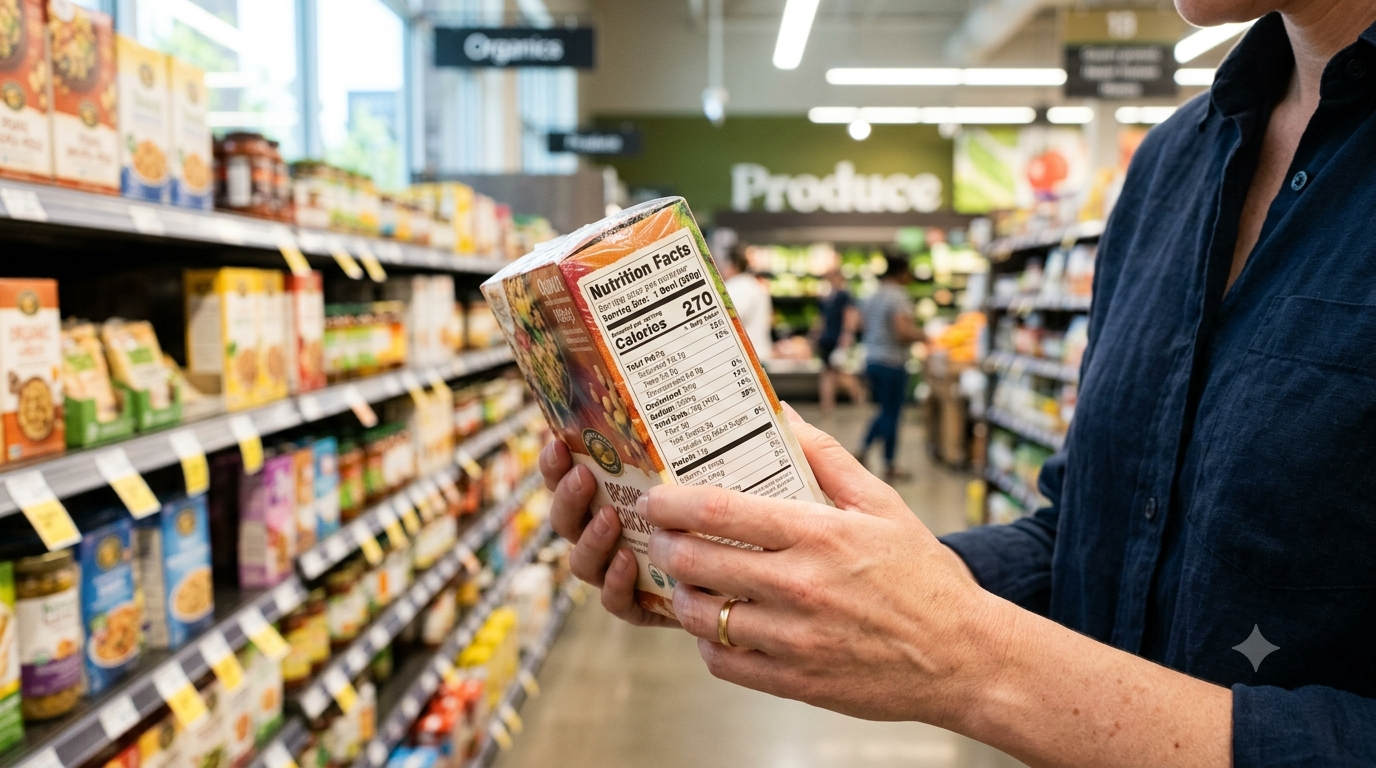
Person reading a nutrition label before buying packaged food.
Frequently Asked Questions
Can I Ever Eat High-Carb Foods on Keto?
Occasional higher-carb meals won’t erase all of your progress, but regularly eating high-carb foods can make it much harder to maintain ketosis and stay consistent.
For beginners, focusing on simple, low-carb whole foods is usually the easiest approach.
Is Fruit Completely Forbidden on Keto?
No.
While many fruits are naturally high in sugar, small portions of berries are generally much easier to fit into a ketogenic eating plan than bananas, grapes, or mangoes.
Are Artificial Sweeteners Allowed?
Some low-carb sweeteners can be useful in moderation, but not all sweeteners affect the body the same way.
Reading ingredient labels and choosing products with well-known keto-friendly sweeteners is often the best approach.
What If I Accidentally Eat Too Many Carbs?
Don’t panic.
One meal doesn’t define your progress.
Simply return to your normal keto eating pattern at your next meal and stay consistent over time.
Long-term habits matter far more than occasional mistakes.
Final Thoughts
Starting the ketogenic diet isn’t about memorizing endless rules or avoiding every food you enjoy.
It’s about learning which foods support your goals—and which ones make staying consistent more difficult.
The good news is that once you recognize the most common high-carb foods, grocery shopping becomes easier, meal planning takes less time, and making confident choices starts to feel natural.
Remember, keto isn’t about perfection. It’s about building sustainable habits that you can follow for the long term.
If you’re still wondering what to eat each day—or you’d prefer a structured plan that removes the guesswork entirely—our in-depth review of The Ultimate Keto Meal Plan explains exactly how a ready-made meal plan can simplify shopping, cooking, and staying on track.