Starting the keto diet is one thing.
Walking into a grocery store for the first time as a keto beginner is something else entirely.
One minute you’re motivated to change your eating habits, and the next you’re standing in front of dozens of shelves wondering whether the foods you’ve always bought still fit your new lifestyle. Bread, cereal, pasta, fruit juice, flavored yogurt… suddenly, everything seems off-limits.
It’s no surprise that many beginners feel overwhelmed before they even cook their first keto meal.
The good news? Building a successful ketogenic diet doesn’t start with expensive supplements, complicated recipes, or perfectly tracking every macro. It starts with a smart shopping list.
When your kitchen is stocked with the right foods, making healthy choices becomes much easier. Instead of relying on willpower every day, you create an environment that naturally supports your goals.
In this complete beginner’s guide, you’ll discover exactly what to buy, which foods to avoid, and how to build a keto-friendly grocery cart without wasting money on unnecessary “keto” products. Whether you’re starting keto to lose weight, improve your energy, or simply reduce your carb intake, this guide will help you shop with confidence from day one.
Let’s start with one simple truth that many beginners overlook: your keto success often begins long before you prepare your first meal—it begins in the grocery store.
Why Your First Grocery Trip Matters More Than You Think
Most people assume that success on the keto diet begins in the kitchen.
In reality, it begins much earlier—at the grocery store.
Think about it for a moment.
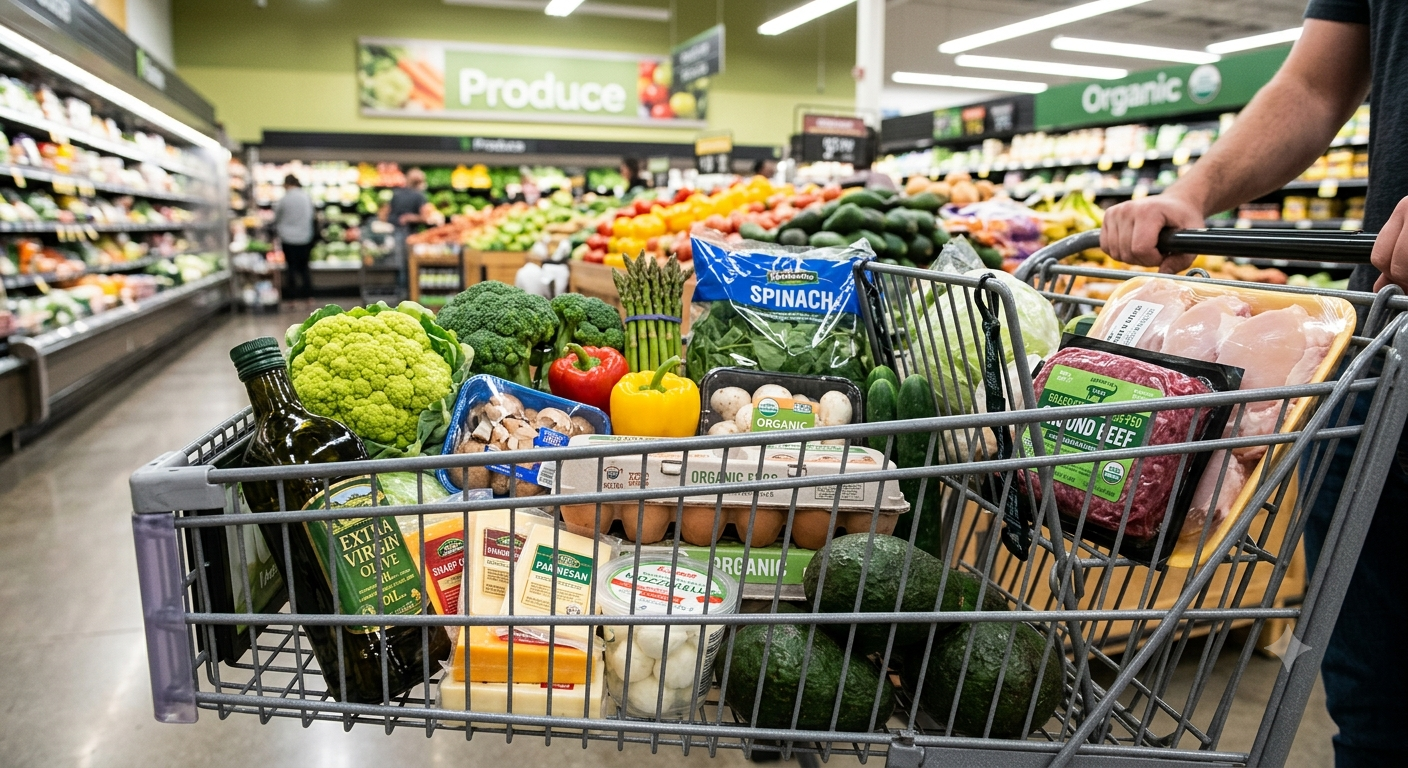
Every meal you’ll eat over the next week depends on the foods you bring home today. If your refrigerator is stocked with fresh proteins, healthy fats, and low-carb vegetables, preparing a keto-friendly meal becomes the easiest option. But if your pantry is still filled with bread, chips, sugary snacks, and processed foods, sticking to your new eating plan becomes much harder.
That’s why experienced keto followers often say that discipline starts with preparation.
A well-planned shopping trip helps you:
- Avoid impulse purchases that can quickly increase your carb intake.
- Save time by knowing exactly what to buy.
- Reduce food waste by choosing ingredients you’ll actually use.
- Stay consistent, especially during your first few weeks on keto.
Another common mistake beginners make is believing they need to buy expensive products labeled “Keto.”
The truth is, most of the foods that support a ketogenic lifestyle are ordinary ingredients you’ll find in almost every supermarket. Fresh meat, eggs, fish, cheese, leafy greens, avocados, olive oil, and nuts have been keto-friendly long before “keto” became a popular trend.
Learning to recognize these everyday foods will not only save you money but also make your new lifestyle much easier to maintain.
Now that you understand why your shopping choices matter, let’s look at exactly what should go into your grocery cart.
The 7 Essential Food Groups Every Keto Beginner Should Buy
One of the biggest misconceptions about keto is that you need a completely different way of shopping.
You don’t.
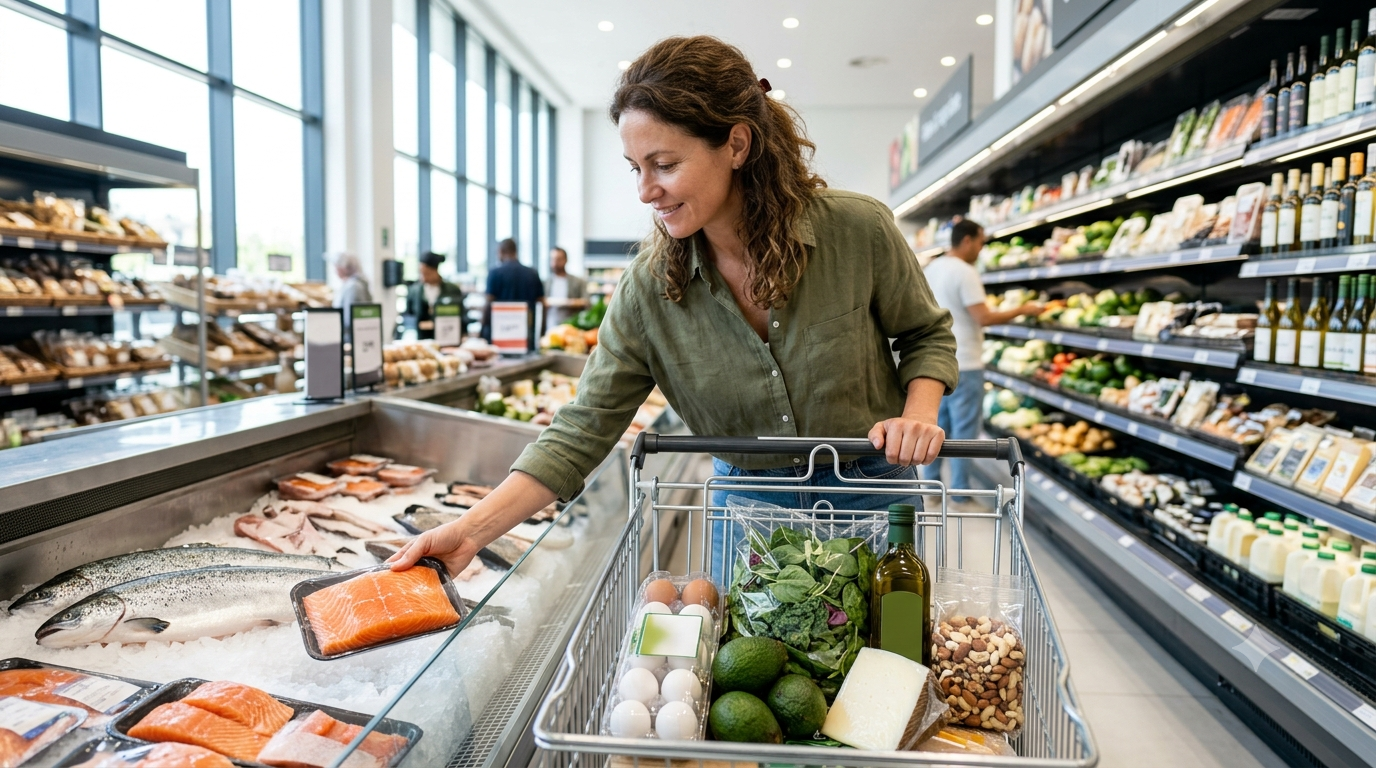
The secret is learning which everyday foods support ketosis and building your meals around them. Once you know the essentials, grocery shopping becomes much faster—and much less confusing.
Here are the seven food groups every beginner should focus on.
1. Healthy Fats: Your Primary Energy Source
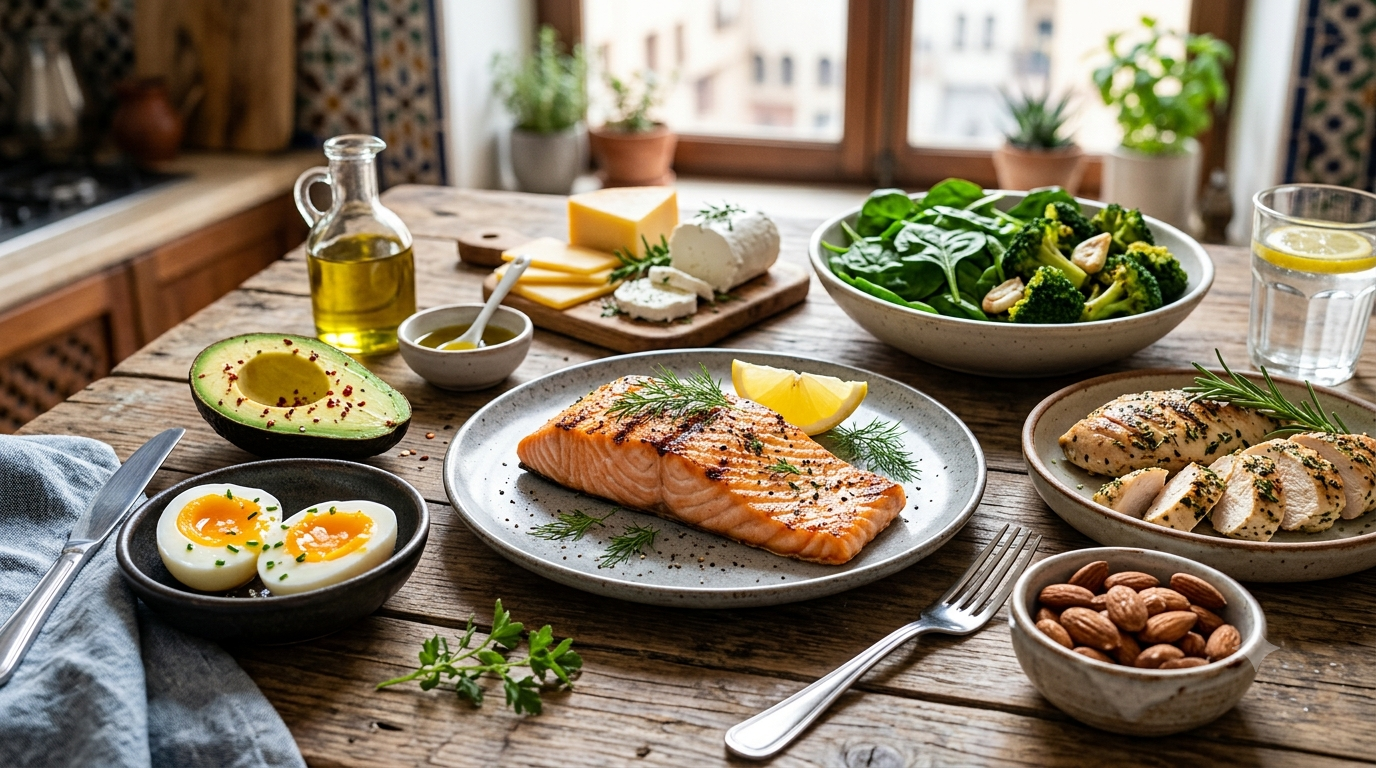
Unlike traditional low-fat diets, the ketogenic diet relies on healthy fats as its main source of energy. Choosing quality fats helps keep you satisfied, supports ketosis, and makes meals more enjoyable.
Add these staples to your shopping cart:
- Avocados
- Extra virgin olive oil
- Coconut oil
- Butter or ghee
- Olives
- Avocado oil
Shopping Tip: Choose minimally processed oils whenever possible and avoid products made with added sugars or artificial flavorings.
2. Protein: Build Every Meal Around It
Protein helps preserve muscle mass and keeps you feeling full between meals. The goal isn’t to eat excessive amounts of protein but to include a quality source with every meal.
Good choices include:
- Chicken
- Beef
- Turkey
- Pork
- Salmon
- Tuna
- Sardines
- Eggs
Whenever possible, choose fresh or minimally processed meats. Some packaged meats contain hidden sugars or starches, so it’s always worth checking the ingredient list.
3. Low-Carb Vegetables: Don’t Skip Them
Many beginners mistakenly think keto means eating only meat and cheese.
In reality, non-starchy vegetables provide fiber, vitamins, minerals, and variety while keeping carbohydrate intake relatively low.
Great options include:
- Spinach
- Broccoli
- Cauliflower
- Zucchini
- Asparagus
- Bell peppers
- Cucumbers
- Lettuce
- Mushrooms
A simple rule to remember is this:
If it grows above the ground, it’s usually a better keto choice than vegetables that grow below the ground.
4. Dairy Products (If You Tolerate Them)
Many dairy products fit well into a ketogenic lifestyle because they’re naturally high in fat and relatively low in carbohydrates.
Look for:
- Cheddar cheese
- Mozzarella
- Parmesan
- Cream cheese
- Heavy cream
- Full-fat Greek yogurt (unsweetened)
Avoid flavored yogurts or reduced-fat versions, as they often contain added sugar.
5. Nuts & Seeds: Perfect for Healthy Snacks
Nuts and seeds are convenient, portable, and rich in healthy fats. They’re excellent for quick snacks or adding texture to meals.
Some of the best choices are:
- Almonds
- Walnuts
- Pecans
- Macadamia nuts
- Chia seeds
- Flaxseeds
- Pumpkin seeds
Because they’re calorie-dense, it’s a good idea to enjoy them in moderate portions.
6. Pantry Essentials You’ll Use Every Week
A well-stocked pantry makes keto cooking much easier.
Consider keeping these basics on hand:
- Sea salt
- Black pepper
- Garlic powder
- Paprika
- Italian seasoning
- Apple cider vinegar
- Dijon mustard (without added sugar)
- Unsweetened almond flour
- Unsweetened cocoa powder
These simple ingredients can transform basic meals into something flavorful without adding unnecessary carbohydrates.
7. Keto-Friendly Drinks
What you drink matters just as much as what you eat.
The safest everyday options include:
- Water
- Sparkling water
- Black coffee
- Unsweetened tea
- Herbal tea
If you enjoy coffee, adding a splash of heavy cream can make it more satisfying while staying keto-friendly.
The easiest drinks to avoid are sugary sodas, fruit juices, sweetened iced teas, and energy drinks loaded with added sugar.
By focusing on these seven food groups, you’ll build a grocery cart filled with ingredients that make keto both practical and sustainable. More importantly, you’ll avoid the common mistake of relying on expensive processed products marketed as “keto.”
Foods to Avoid: What Should Never Go Into Your Keto Shopping Cart
Knowing what to buy is only half the equation.
Equally important is knowing which foods can quickly increase your carbohydrate intake and make it more difficult to stay in ketosis.
The good news is that you don’t have to memorize hundreds of rules. Most high-carb foods fall into a few simple categories.
Use the table below as a quick reference during your next grocery trip.
| Avoid These Foods ❌ | Choose These Instead ✅ |
|---|---|
| White bread, bagels, tortillas | Lettuce wraps or low-carb alternatives |
| White rice and pasta | Cauliflower rice or zucchini noodles |
| Breakfast cereals | Eggs with avocado or cheese |
| Potatoes and French fries | Cauliflower, broccoli, or zucchini |
| Sugary yogurt | Plain full-fat Greek yogurt |
| Candy and chocolate bars | Keto-friendly dark chocolate (in moderation) |
| Soda and fruit juice | Water, sparkling water, or unsweetened tea |
| Cookies, cakes, and pastries | Homemade keto desserts |
| Sweet sauces (ketchup, BBQ sauce) | Mustard, mayonnaise, olive oil-based dressings |
| Chips and crackers | Cheese crisps, nuts, or pork rinds |
Remember, keto isn’t about buying products with a “keto” label.
It’s about choosing naturally low-carb, nutrient-dense foods most of the time.
When in doubt, ask yourself a simple question:
“Is this food close to its natural form?”
If the answer is yes, it’s often a better choice than heavily processed alternatives.
A Simple 7-Day Beginner Keto Shopping List
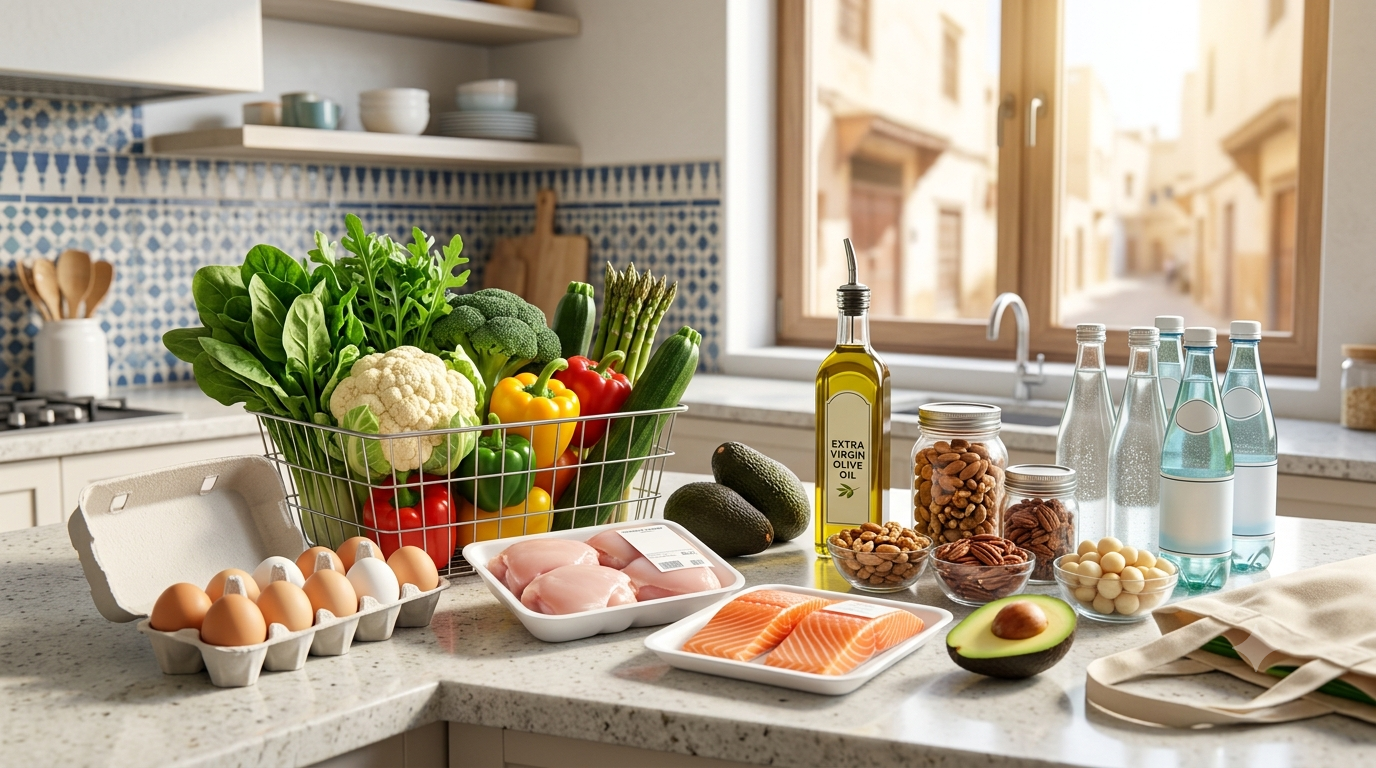
To make your first grocery trip even easier, here’s a practical shopping list based on foods that work well for most beginners.
🥩 Protein
- Chicken breast or thighs
- Ground beef
- Salmon
- Eggs
- Canned tuna
🥑 Healthy Fats
- Avocados
- Extra virgin olive oil
- Butter
- Olives
🥦 Vegetables
- Spinach
- Broccoli
- Cauliflower
- Zucchini
- Lettuce
- Cucumbers
🧀 Dairy
- Cheddar cheese
- Mozzarella
- Heavy cream
- Cream cheese
🥜 Nuts & Seeds
- Almonds
- Walnuts
- Chia seeds
☕ Drinks
- Water
- Sparkling water
- Black coffee
- Unsweetened tea
This list is intentionally simple.
You don’t need dozens of ingredients to eat well on keto. Starting with basic, versatile foods makes meal preparation easier and helps you build confidence before experimenting with more recipes.
Common Grocery Shopping Mistakes Beginners Make
Even with a good shopping list, a few common mistakes can make starting keto more difficult than it needs to be.
Buying Too Many “Keto” Packaged Products
Many products marketed as keto are highly processed and often more expensive than whole foods. Build your meals around fresh ingredients first, then use packaged products only when they genuinely add convenience.
Ignoring Food Labels
Sugar can appear under many different names. Taking a few seconds to read the ingredient list can help you avoid hidden carbohydrates.
Shopping While Hungry
This simple mistake often leads to impulse purchases. Eating a balanced meal before grocery shopping can make it much easier to stick to your list.
Trying to Buy Everything at Once
Your kitchen doesn’t need to be perfectly stocked on day one. Start with the essentials, then gradually add new ingredients and recipes as you become more comfortable with the keto lifestyle.
Ready to Make Keto Even Easier?
A good shopping list is the first step.
The next challenge is knowing what to cook with everything you’ve just bought.
That’s where many beginners start spending hours searching for recipes, planning meals, and wondering if they’re staying on track.
If you’d rather skip the guesswork, you may find it helpful to read our in-depth review of The Ultimate Keto Meal Plan, where we take a closer look at a structured program designed to simplify meal planning for beginners.
Frequently Asked Questions
Can I Start Keto Without Buying Special “Keto” Products?
Absolutely.
One of the biggest myths about the ketogenic diet is that you need expensive products labeled “keto.” In reality, most successful keto meals are built around simple whole foods like eggs, meat, fish, vegetables, healthy fats, and cheese.
If you focus on real ingredients instead of heavily processed snacks, you’ll often save money while eating healthier.
Is Peanut Butter Keto-Friendly?
It can be.
Choose natural peanut butter with no added sugar or hydrogenated oils. Since peanut butter contains some carbohydrates, it’s best enjoyed in moderation.
Almond butter and other unsweetened nut butters are also popular keto-friendly options.
Can I Eat Fruit on Keto?
Some fruits are lower in carbohydrates than others.
Berries—such as strawberries, raspberries, and blackberries—can usually fit into a ketogenic diet in moderate portions.
High-sugar fruits like bananas, grapes, mangoes, and pineapples are generally less suitable for people trying to stay in ketosis.
How Much Should I Spend on My First Keto Grocery Trip?
There’s no fixed amount.
Many beginners spend more than necessary because they purchase specialty products marketed as “keto.”
Building your shopping list around fresh meat, eggs, vegetables, healthy fats, and dairy is often the most cost-effective approach.
Is Meal Planning Really Necessary?
Not necessarily—but it makes life much easier.
Planning your meals in advance reduces last-minute decisions, helps you avoid impulse purchases, and makes it easier to stay consistent throughout the week.
That’s one reason many beginners choose to follow a structured meal plan instead of planning every meal themselves.
Printable Keto Shopping Checklist
Save this checklist or take a screenshot before your next grocery trip.
🥩 Protein
☐ Chicken
☐ Beef
☐ Salmon
☐ Tuna
☐ Eggs
☐ Turkey
🥑 Healthy Fats
☐ Avocados
☐ Olive oil
☐ Butter
☐ Coconut oil
☐ Olives
🥦 Vegetables
☐ Spinach
☐ Broccoli
☐ Cauliflower
☐ Zucchini
☐ Lettuce
☐ Cucumbers
☐ Bell peppers
🧀 Dairy
☐ Cheddar cheese
☐ Mozzarella
☐ Cream cheese
☐ Heavy cream
🥜 Nuts & Seeds
☐ Almonds
☐ Walnuts
☐ Pecans
☐ Chia seeds
☐ Flaxseeds
☕
☐ Coffee
☐ Green tea
☐ Herbal tea
☐ Sparkling water
☐ Drinking water
Final Thoughts
Starting the keto diet doesn’t have to feel overwhelming.
You don’t need expensive supplements, complicated recipes, or a pantry full of specialty products. In fact, the most successful keto grocery carts are often the simplest—filled with fresh proteins, healthy fats, low-carb vegetables, and a handful of everyday staples.
Think of your shopping list as the foundation of your success. When your kitchen is stocked with the right ingredients, preparing keto-friendly meals becomes easier, cravings are easier to manage, and staying consistent feels much more natural.
If you’re comfortable creating your own meal plans, this shopping guide gives you everything you need to get started.
However, if you’d rather skip the planning process and follow a ready-made system, you may also want to read our complete review of The Ultimate Keto Meal Plan. We explain exactly what’s included, who it’s designed for, and whether it’s worth trying.
👉 Read Our Full Review of The Ultimate Keto Meal Plan → Click Here
📌 SEO Optimization
Focus Keyword
Keto Shopping List for Beginners
Secondary Keywords
- Keto grocery list
- Beginner keto shopping list
- Keto foods to buy
- Keto grocery guide
- Keto grocery list for beginners
- What to buy on keto
- Printable keto shopping list
- Keto food list