
You know what foods to avoid.
You may already have a keto shopping list. You might even know which breakfasts and snacks work well on a low-carb lifestyle.
But then Monday arrives—and you have to decide what to eat.
Breakfast is easy enough. Lunch becomes a question mark. By dinner, you’re staring into the refrigerator hoping something will make sense.
And this is where many beginners discover an important difference:
Knowing what keto is and knowing how to organize your week around it are two very different things.
A successful keto routine doesn’t have to involve complicated recipes, expensive ingredients, or spending hours in the kitchen.
What most beginners need is a simple structure they can actually follow.
In this guide, we’ll build a practical 7-day keto meal plan designed to take some of the guesswork out of your week. You’ll see how to organize your meals, simplify grocery shopping, prepare ahead, and make sensible substitutions when a particular meal doesn’t suit you.
No complicated meal-planning system. No endless recipe list. Just a practical starting point for your first week.
What Should a Beginner Keto Meal Plan Look Like?
Before creating a weekly menu, there’s one principle worth remembering:
Simple beats complicated.
A meal plan can look impressive on paper but become useless if every meal requires a different recipe, unusual ingredients, or an hour of preparation.
For a beginner, a practical plan should ideally be:
- Simple enough to follow
- Based on familiar, accessible foods
- Flexible enough for real life
- Easy to prepare ahead
- Structured without being unnecessarily restrictive
You also don’t need to make every meal completely different.
Repeating ingredients can actually make shopping and preparation easier. The goal is to create a routine that reduces daily decision-making—not another task you have to manage.
And remember, this is a general meal-planning guide, not a personalized nutrition plan. Individual carbohydrate needs and dietary requirements can vary.
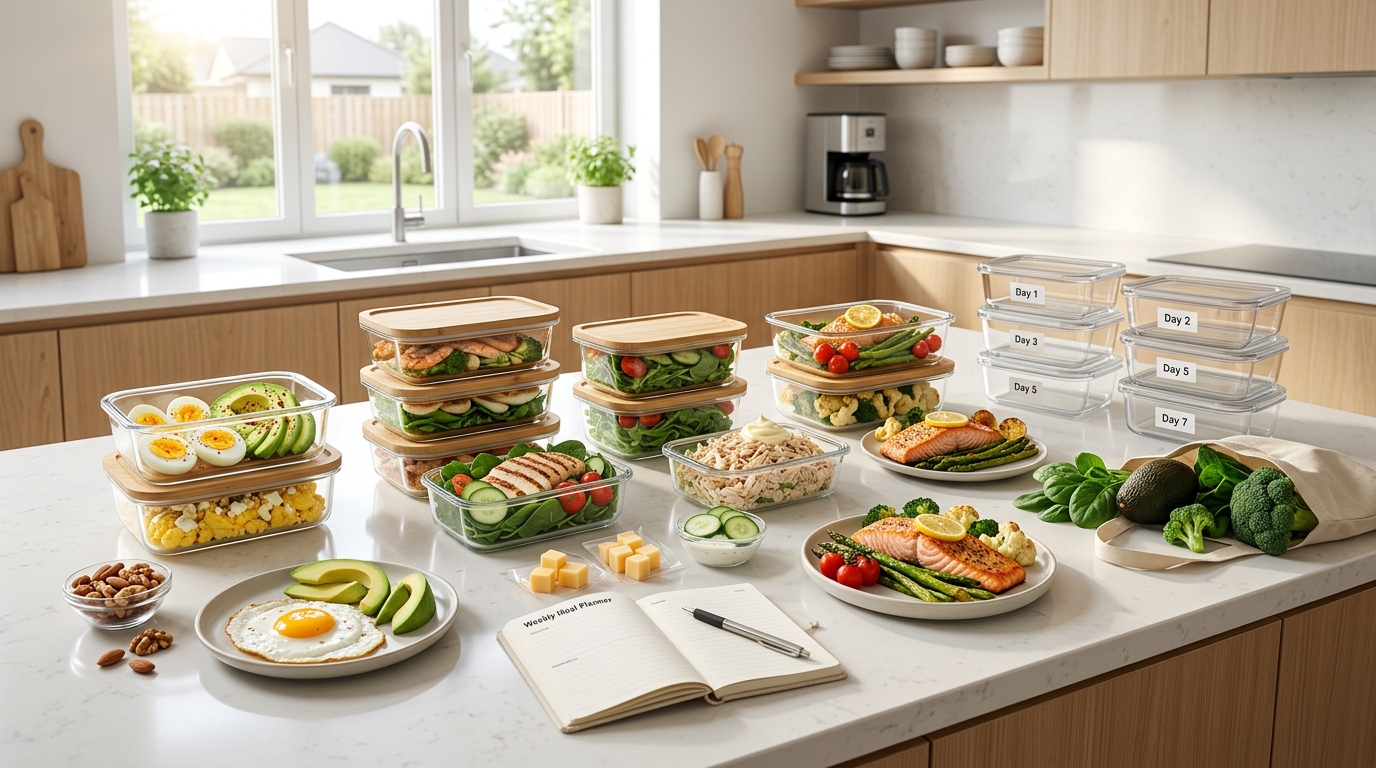
Simple seven-day keto meal plan with practical low-carb meals and ingredients.
The Simple 7-Day Keto Meal Plan
The easiest way to make keto less overwhelming is to stop deciding what to eat at the last minute.
You don’t need seven completely different breakfasts, lunches, and dinners. A better approach is to use simple meals built around familiar low-carb ingredients, then repeat or swap meals when necessary.
Here is a practical example of what your first week could look like.
Important: This is a general example, not a personalized nutrition plan. Adjust portions and ingredients according to your individual needs, preferences, and dietary requirements.
Day 1 — Keep It Simple
Breakfast:
Scrambled eggs with spinach and avocado.
Lunch:
Grilled chicken salad with leafy greens, cucumber, olive oil, and a suitable dressing.
Dinner:
Baked salmon with roasted broccoli and zucchini.
Optional snack:
A small portion of cheese or nuts if you’re genuinely hungry.
The first day doesn’t need to be complicated. The goal is simply to establish a routine that feels manageable.
Day 2 — Build Around Protein
Breakfast:
Eggs with cheese and sautéed vegetables.
Lunch:
Tuna salad with leafy greens, cucumber, and avocado.
Dinner:
Grilled chicken with cauliflower and a side salad.
Optional snack:
Plain Greek yogurt with a small serving of berries.
Instead of searching for completely new meals every day, notice how a few basic ingredients can be used in different combinations.
Day 3 — Make Lunch Easy
Breakfast:
An omelet with spinach, mushrooms, and cheese.
Lunch:
Leftover grilled chicken served over a fresh salad.
Dinner:
Ground beef with sautéed zucchini and leafy greens.
Optional snack:
Olives and a small portion of cheese.
Using leftovers for lunch can save both time and effort—and there’s nothing wrong with repeating a meal when it works.
Day 4 — Use What You Already Have
Breakfast:
Eggs with avocado and a side of low-carb vegetables.
Lunch:
Chicken lettuce wraps with cucumber and a suitable low-carb topping.
Dinner:
Baked fish with broccoli and cauliflower.
Optional snack:
A small portion of almonds or walnuts.
By the middle of the week, the objective isn’t to make your meals more elaborate.
It’s to make your routine easier to maintain.
Day 5 — Keep Preparation Minimal
Breakfast:
Scrambled eggs with mushrooms and cheese.
Lunch:
Tuna and avocado salad.
Dinner:
Grilled chicken with roasted vegetables and leafy greens.
Optional snack:
Plain Greek yogurt or a small serving of berries.
If you’re busy, simple meals can be a major advantage. You don’t need to spend your evening preparing something completely different from what you ate yesterday.
Day 6 — Flexible and Practical
Breakfast:
Eggs with spinach and avocado.
Lunch:
Leftover chicken or fish with a fresh salad.
Dinner:
Beef with zucchini, mushrooms, and leafy greens.
Optional snack:
Cheese, olives, or a small portion of nuts.
Saturday can also be a useful day to use up ingredients before your next grocery trip.
Day 7 — Finish Without Overcomplicating It
Breakfast:
Omelet with cheese and low-carb vegetables.
Lunch:
Chicken salad with avocado and olive oil.
Dinner:
Salmon or another suitable protein with roasted broccoli and cauliflower.
Optional snack:
A small keto-friendly dessert if you want something sweet.
And that’s the point.
A successful keto week doesn’t need to look complicated.
The meals above rely on a relatively small collection of ingredients that can be mixed, matched, and prepared in advance.
Internal Link
Want to make grocery shopping easier? Check out our [Keto Shopping List for Beginners] for a practical list of foods to keep on hand.
One Important Rule: Don’t Try to Be Perfect
There is another reason I prefer this kind of meal plan for beginners.
It leaves room for real life.
You may not have salmon one evening. You may run out of avocado. You may not feel like cooking.
That’s okay.
A useful meal plan should give you structure without creating unnecessary stress.
The objective isn’t to follow seven days perfectly.
It’s to make it easier to know what your next meal could look like.
How to Build a Keto Plate
A meal plan tells you what to eat. But learning how to build a simple keto-friendly meal gives you something even more useful: flexibility.
You won’t always have the exact ingredients listed in a meal plan. You may eat at a friend’s house, have a busy evening, or simply want something different.
Instead of starting from scratch every time, think of your meal as a simple combination of components.
1. Start With a Protein
Choose a suitable protein source such as:
- Eggs
- Chicken
- Beef
- Fish
- Seafood
Protein gives your meal structure and makes it easier to create a satisfying dish without relying on bread, pasta, or other high-carbohydrate staples.
2. Add Low-Carb Vegetables
Next, add vegetables such as:
- Spinach
- Broccoli
- Zucchini
- Cauliflower
- Leafy greens
- Cucumber
This is where you can add variety without making your meals complicated.
3. Include a Suitable Source of Fat
Depending on the meal and your individual needs, options can include:
- Avocado
- Olive oil
- Cheese
- Nuts and seeds
The important point is not to turn every meal into a complicated calculation. Start with simple ingredients and pay attention to portions and your overall eating pattern.
4. Add Flavor Without Adding Unnecessary Carbs
A simple meal doesn’t have to be boring.
Herbs, spices, lemon, garlic, and suitable dressings can make the same basic ingredients feel completely different.
That’s one reason a flexible approach is more sustainable than relying on complicated recipes every day.
The Simple Formula to Remember
When you’re standing in the kitchen wondering what to make, use this basic thought process:
Protein + low-carb vegetables + suitable fat + flavor
That’s it.
You don’t need to memorize dozens of recipes.
And if you already know the foods that fit into a low-carb approach, you can create countless combinations from a relatively small number of ingredients.
For a more detailed list of foods to keep available, see:
👉 Keto Shopping List for Beginners
How to Make This Meal Plan Easier With Meal Prep
One of the biggest advantages of planning your meals for the week is that you can prepare some of the work before you’re hungry.
You don’t necessarily need to cook seven complete days of meals on Sunday.
Instead, prepare a few basic ingredients that can be combined throughout the week.
For example, you could prepare several portions of protein, wash and cut vegetables, and organize simple ingredients in advance.
Then, when lunchtime arrives, you’re not starting from zero.
A simple approach:
Prepare → Store → Combine → Eat
This can turn a meal that might normally take much longer into something far more manageable.
It also reduces the temptation to abandon your plan simply because you’re tired or busy.
If you want a more detailed approach to preparing your meals ahead of time:
👉 Keto Meal Prep for Beginners
A Better Way to Think About Meal Planning
Don’t think of a meal plan as a strict schedule where one missed meal means you’ve failed.
Think of it as a decision-making shortcut.
Instead of asking:
“What should I eat tonight?”
you already have several reasonable options available.
That small difference can make keto feel much less overwhelming—especially during the first few weeks.
And if you don’t like one of the meals in the seven-day plan?
Don’t force yourself to eat it.
That’s where smart substitutions come in.
What If You Don’t Like One of the Meals?
A meal plan should make your life easier—not force you to eat something you don’t enjoy.
If one meal from the seven-day plan doesn’t appeal to you, don’t throw away the entire plan. Simply make a sensible substitution.
The key is to replace foods with options that serve a similar purpose in the meal.
For example:
- Don’t like salmon? Try another suitable fish or a different protein.
- Not a fan of broccoli? Choose another low-carb vegetable you enjoy.
- Tired of eggs for breakfast? Rotate in another simple low-carb option.
- Don’t want a snack? You don’t have to add one simply because it’s listed as optional.
The goal is flexibility within a consistent framework.
Think in Components, Not Recipes
This is one of the easiest ways to avoid feeling trapped by a meal plan.
Instead of thinking:
“I have to eat this exact recipe.”
Think:
“I need a suitable protein, some low-carb vegetables, and a satisfying combination of ingredients.”
That mindset gives you much more freedom while keeping your weekly plan organized.
5 Mistakes That Can Ruin a Good Meal Plan
Even a well-designed meal plan can become difficult if the planning itself creates unnecessary problems.
Here are five mistakes worth avoiding.
1. Making Every Meal Too Complicated
If every meal requires multiple ingredients and complicated preparation, you’ll eventually get tired of it.
Keep some meals extremely simple.
2. Buying Ingredients Without a Plan
Buying random keto-friendly foods doesn’t automatically create a meal plan.
Know what you’re going to prepare before you fill your shopping cart.
3. Preparing Nothing in Advance
Even a small amount of preparation can make the following days easier.
Having cooked protein or prepared vegetables available can be the difference between following your plan and choosing whatever is most convenient.
4. Having No Backup Meal
Life doesn’t always follow your schedule.
Keep one or two simple meal options available for unexpectedly busy days.
5. Giving Up After One Imperfect Meal
One meal that doesn’t go according to plan doesn’t erase everything you’ve done.
Don’t turn a small deviation into an excuse to abandon the entire week.
If you want to explore the broader mistakes beginners commonly make when starting keto, see:
👉 7 Biggest Keto Mistakes Beginners Make
Can You Follow Keto With a Busy Schedule?
This is where a meal plan becomes genuinely useful.
If you’re working long hours, taking care of a family, or simply don’t want to spend every evening cooking, simplicity matters more than variety.
You can make the week easier by:
- Preparing tomorrow’s lunch the night before.
- Cooking extra portions for leftovers.
- Keeping a few basic ingredients ready.
- Having a quick backup meal available.
- Reusing ingredients across several meals.
You don’t need to spend your entire Sunday preparing dozens of containers.
The objective is simply to remove as many last-minute food decisions as possible.

Busy professional preparing simple keto meals ahead of time for the week.
When a Done-for-You Meal Plan Makes Sense
At this point, you may have noticed something important:
The hardest part of keto isn’t always knowing which foods are low in carbs.
Sometimes, it’s making the decision three times a day.
What should I eat for breakfast?
What should I prepare for lunch?
What do I need to buy?
What can I make when I’m short on time?
For some people, having a basic weekly plan is enough to solve that problem. Others prefer having everything organized for them from the beginning.
That’s where a done-for-you meal plan can make sense.
Instead of building your own calendar, searching for recipes, and figuring out how to combine meals, a structured program can give you a clearer starting point.
Who might benefit from one?
A ready-made meal plan may be particularly useful if you:
- Are new to keto and don’t know where to start.
- Have limited time for meal planning.
- Get tired of deciding what to eat every day.
- Prefer following a predefined structure.
- Have tried keto before but struggled with consistency.
Of course, a ready-made plan isn’t automatically better than creating your own. The right choice depends on how much structure you want and how much planning you’re willing to do yourself.
If you want to see whether a structured approach is worth considering, we’ve reviewed The Ultimate Keto Meal Plan in detail, including what it contains, who it’s designed for, and its potential limitations.
👉 The Ultimate Keto Meal Plan Review
Frequently Asked Questions
What should a beginner eat on keto?
A beginner can build meals around suitable protein sources, low-carb vegetables, and appropriate sources of fat. The simplest approach is to focus on familiar foods and create meals that are easy to repeat and prepare.
Can I repeat meals on a keto diet?
Absolutely. Repeating meals can make grocery shopping, preparation, and portion planning easier. Variety is useful, but you don’t need a completely different recipe every day.
What should I eat for dinner on keto?
Simple options include a suitable protein such as chicken, fish, or beef paired with low-carb vegetables and an appropriate source of fat. The exact choice depends on your preferences and dietary needs.
Do I need snacks on keto?
Not necessarily. Snacks are optional and can be useful when you’re genuinely hungry, but they don’t need to be included simply because they’re part of a meal plan.
For more ideas, see our guide to:
👉 Best Keto Snacks for Beginners
How do I plan a keto week?
Start by choosing a small number of simple breakfasts, lunches, and dinners. Make a grocery list based on those meals, prepare a few ingredients in advance, and keep one or two quick backup meals available.
Can I customize a beginner keto meal plan?
Yes. In fact, flexibility can make a meal plan easier to maintain. You can substitute ingredients you dislike with suitable alternatives while keeping the overall structure of the meal.

Prepared low-carb meals making a busy keto routine easier to manage.
Final Thoughts
A good keto meal plan doesn’t need to be complicated.
The real value is knowing what you’re going to eat before you’re hungry and running out of options.
With a simple seven-day structure, a practical grocery list, and a little preparation, you can remove much of the daily guesswork that makes starting keto feel overwhelming.
And if you discover that planning every meal yourself is exactly what you don’t want to spend your time doing, a structured, ready-made meal plan may be worth considering.
👉 The Ultimate Keto Meal Plan Review